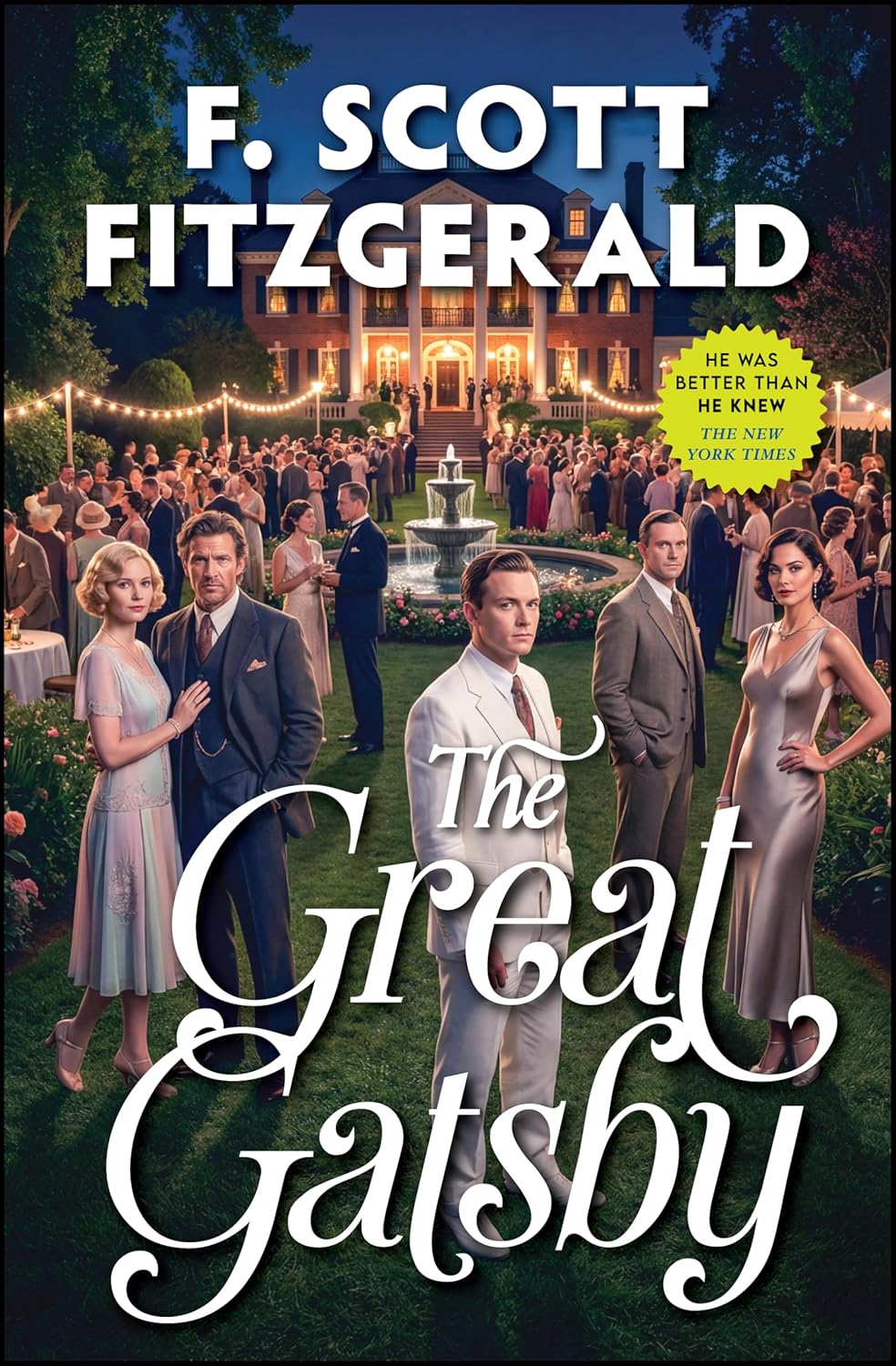
The Great Gatsby', first published in 1925, drops you into the summer nights of Long Island’s Jazz Age, where champagne flows, jazz pulses, and every smile seems to hide a secret. Narrator Nick Carraway, a young Midwesterner seeking a fresh start, rents a modest house in West Egg—right next door to a mansion that blazes with lights and parties hosted by Jay Gatsby.
No one quite knows who Gatsby is. A war hero? A bootlegger? A prince in disguise? Guests gossip, dance, and drift away at dawn, yet Gatsby remains strangely alone, watching the green light across the bay. That light belongs to Daisy Buchanan, Nick’s cousin, now married to the wealthy, brutal, and entitled Tom. When Nick arranges a reunion between Daisy and Gatsby, the novel’s heart ignites: a love story powered by longing, reinvention, and the dangerous belief that the past can be rewritten.
As Gatsby’s dream collides with Tom’s ruthless pride, the story tightens into a suspenseful clash of desire, money, and moral decay. Behind the dazzling surfaces, Fitzgerald reveals a world where status is a weapon, innocence is expensive, and the American Dream can shimmer like gold—then cut like glass.
F. Scott Fitzgerald (1896–1940) wrote with unmatched elegance about ambition and heartbreak, drawing on his own experiences in the roaring 1920s. In The Great Gatsby, his most famous novel, every scene crackles with beauty and tension, inviting you to step into a party you won’t forget—and to discover what it costs when a dream is pursued without limits.
Between West Egg’s glitter and the gray Valley... See more
The Great Gatsby', first published in 1925, drops you into the summer nights of Long Island’s Jazz Age, where champagne flows, jazz pulses, and every smile seems to hide a secret. Narrator Nick Carraway, a young Midwesterner seeking a fresh start, rents a modest house in West Egg—right next door to a mansion that blazes with lights and parties hosted by Jay Gatsby.
No one quite knows who Gatsby is. A war hero? A bootlegger? A prince in disguise? Guests gossip, dance, and drift away at dawn, yet Gatsby remains strangely alone, watching the green light across the bay. That light belongs to Daisy Buchanan, Nick’s cousin, now married to the wealthy, brutal, and entitled Tom. When Nick arranges a reunion between Daisy and Gatsby, the novel’s heart ignites: a love story powered by longing, reinvention, and the dangerous belief that the past can be rewritten.
As Gatsby’s dream collides with Tom’s ruthless pride, the story tightens into a suspenseful clash of desire, money, and moral decay. Behind the dazzling surfaces, Fitzgerald reveals a world where status is a weapon, innocence is expensive, and the American Dream can shimmer like gold—then cut like glass.
F. Scott Fitzgerald (1896–1940) wrote with unmatched elegance about ambition and heartbreak, drawing on his own experiences in the roaring 1920s. In The Great Gatsby, his most famous novel, every scene crackles with beauty and tension, inviting you to step into a party you won’t forget—and to discover what it costs when a dream is pursued without limits.
Between West Egg’s glitter and the gray Valley of Ashes, Nick watches fortunes rise and crumble, and a single reckless night sets everything spinning. If you love sharp dialogue, atmosphere, and endings that haunt, Gatsby’s world will pull you in—and refuse to let go.